Tuesday, 10 June 2008

Bengal Cat Breeders Texas

Bengal cat
Bengal cat - photo copyright Helmi Flick

Bengal Cat Breeders Texas is another searched for term and not surprisingly. For me Texas is the heart of America and the Bengal cat is very much an American style cat. Plenty of bling basically. Very much part of the US culture but of course very popular in the UK as well. It seems though that the Americans love to have a bit more and can get it by being resourceful and inventive. That is why they are the most successful nation but they do need to watch that they don't go too far.

Anyway back to Bengal cats in Texas. One cattery immediately comes to mind because I think that the cat on the RHS of the header on the main website came from this cattery. The photograph is by Helmi Flick and the cat's name is Kattitude Jumping Jack Flash and the cattery is the first one listed:

Kattitude Bengals
If I am correct about Jumping Jack Flash, he is a fantastic cat and he was photographed by a fantastic photographer, Helmi Flick. You couldn't get a better combination. Jack Flash was on the March 2004 of Cat Fancy magazine, a fine recommendation for this cattery.

Kattitude Bengals are situated in East Texas, about 60 miles west of Shreveport Louisiana. Click on the link to see the area around Shreveport (Google maps). All other links on locations go to Google maps.

Jabari Bengals
They seem to be well established and quality. They are based in Houston, which is about 200 miles south of Dallas (for all Brits flying in to Dallas airport!). TICA outstanding cattery and TIBS (The International Bengal Society) breeder of distinction.

Spotagious Bengals
Located near Corpus Christi (not far then from Jabari Bengals - 100+ miles), this is another good looking cattery judging by the website and show brag. This cattery is also TICA and TIBS recommended.

Sea Gold Bengals

Located "40 miles south of Houston". This puts them right on or very near the coast on my reckoning, which probably accounts for the name of the cattery. Sounds a great place. This is another in this foursome of catteries in an area bounded by a major road (route 20) and the coast line of the Gulf of Mexico in the south.

They all produce that precious wild look, perfect personalities and outstanding coats judging by their websites.

Wild on Spots Bengals of Texas
This cattery has employed Helmi to photograph some of their cats. They are located 10 mins drive from Dallas airport (DFW). This is another cattery near Dallas.

Mystre Bengals
When you get to this website you hear the tiny vulnerable cries of Bengal kittens. My cat who is next to me looked around. They are on a video on the home page (as at the date of this post). They are located close to the NASA base, on the south west borders of Houston.

I think this is a good selection. I couldn't find any north west of Dallas. All these Bengal Cat Breeders in Texas are based in the south. Anyway if someone wants to be on this list leave a comment please. Thanks.

Here's 2 more, Bengal cat breeders Texas, who left comments (see below). I'd like to feature them here:

Katznjamr
Classy website, lovely facilities with plenty of space (and accolades for their breeding of about 13 years). And I like it when breeders show people their facilities. It shows confidence and a relaxed attitude I think. Located in Texas. Run by Jennifer Miller who talks about breeding Bengal cats and the heart disease HCM.

Cheetahsden

Another classy website. This is a really good website a cut above the average, which is indicative of their approach. Located in Dallas Fort Worth area. The cats are pure class.


Bengal Cat Breeders Texas to Bengal cats for sale

Ancient Chinese Medicine

Chinese medicine
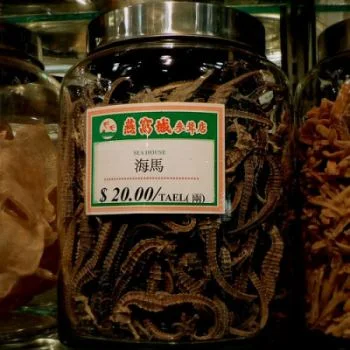
Endangered seahorses (protected by CITES - but not actually protected by the look of it) on sale at a Chinese medicine shop - photo frozenchipmunk (published under a creative commons license). An example of how Ancient Chinese Medicine is having a negative impact on the preservation of endangered wildlife.

Chinese Medicine as far as I am concerned should be either better regulated or modernized. I don't have much hope that this will happen in China or other eastern countries such as Vietnam, who have similar medical ideas. But it could be regulated in the UK. As long as the UK government allow Chinese doctors or medical staff to operate in this country they condone the poaching of precious wildlife it seems to me.

Ancient Chinese Medicine, is what it says on the packet - ancient and the world has moved on substantially while this medicine is practiced at the expense of many wild animals.

The Chinese are probably justifiably very proud of their ancient traditions. Such an ancient civilization. But I know that China wants to be more modern. But the government is still living in the past in respect of its medicine. It is not satisfactory to base medicine around animal parts in the modern world. It was fine hundreds and thousands of years ago but not now, please.

Ancient Chinese medicine is one of the main (perhaps the major cause) causes of poaching of rare wildlife such as the Tiger. The Rhino is another. Chinese doctors think that the Rhino horn can make an impotent man potent -sad really. I would suggest that the person buys some Viagra as this is known to help and it doesn't need animal parts to make it. Maybe that would stop them buying Rhino horn "medicine" and save some Rhinos. It would be nice to learn that the Chinese government had enacted regulations to deal with this. I am sure that some Chinese doctors don't believe in this medicine.

Malayan Tiger
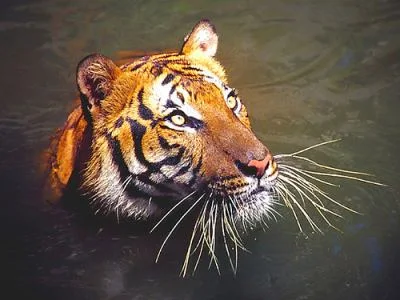
The incredibly endangered Tiger. Photo copyright B cool published under a creative commons license. Tiger parts are used in Ancient Chinese Medicine. We should remember that when and if we next buy Chinese medicine.

I am not mad about the medicine per se but for the damage it does to vulnerable and rare and fine animals such as the Tiger.

What prompted me to make this post was a story about the Vietnamese police arresting some people who had 2 Tigers in a freezer. They were trading in Tiger parts. It was not clear where the Tigers came from, maybe India where the Tiger population is in a catastrophic decline and where the Tiger is heading for extinction as the Cheetah already has in Pakistan. The Tigers were in transit apparently.

Of course India has conservation problems too. The reason why the Tiger is being poached to extinction in India (the main remaining habitat of the Tiger incidentally) is because of a lack of will to enforce the preservation of this fine animal. When the tiger is gone we will bemoan the loss but we cannot manage, it seems, to do things in a proactive manner to protect this species.

Vietnam's record on animal rights is hardly anything to shout about. Like the Chinese some of them kill and eat domestic cats and also like the Chinese they harvest bile from captive wild bears to supply the medicine market. Some Vietnamese as do some Chinese think that a bear's bile can do you some good. They cage them in tiny cages causing untold agony as a result. This is barbaric and cruel, I'm sorry.

Ancient Chinese Medicine has some upgrading to do and the fact that it is ancient is not a reason to preserve it in its current state. It is no recommendation that it is ancient. It should be a criticism at this time.

People in the West should consider not buying medicine from a Chinese outlet. If we do we are very indirectly killing Tigers and hurting bears and other endangered species of wild animal.

Sorry to be so critical but I am speaking on behalf of the silent animals.

Ancient Chinese Medicine to cat meat philosophy

Monday, 9 June 2008

Silver Bengal cat

Silver Bengal cat
Silver Bengal cat photo copyright Helmi Flick

Some people search for a White Bengal cat. What they mean in a Silver Bengal cat or a Snow Bengal cat. A silver Bengal is illustrated above and below.

As you know the classic Bengal cat has a yellow/brown spotted (or marbled) coat. In a Silver Bengal cat the yellow pigmentation in the hair is suppressed by the presence of a gene called the inhibitor gene. The gene is labelled "I" (capital I) by breeders and geneticists. The capital "I" indicates a dominant gene.

This gene as the name suggests inhibits the production of the yellow pigmentation (phaeomelanin) resulting in the silver color (a bit like hair going grey when you become older and its loses its color). A dominant gene will show its effects in terms of the appearance of the cat. It won't be carried by the cat and its effects not shown. The inhibitor gene works inconsistently. Sometimes its effect is incomplete. This leaves a "tarnished" appearance. I guess this term is meant to mean that the effect is tarnished rather than perfect.

silver Bengal cat
Spotted tabby Silver Bengal cat photo copyright Helmi Flick

Incomplete inhibition by the inhibitor gene can result in a variety coat "defects", such as:
  • a brown strip of fur
  • silver background and brown spots
  • silver spots and brown infill
This is not a complete list. This inconsistency is one example why breeding a silver Bengal cat is tricky. This is compounded by variation on contrast over the age of the cat. For example good contrast then poorer contrast and visa-versa.

Although I am not a cat breeder as far as I am aware the silver color was produced by crossing Bengal cats with silver spotted American Shorthair cats and Egyptian Maus (there is at least one silver Egyptian Mau on this page). You can see a couple of silver American Shorthair cats with marbled coats if you click on this link.

Also, as far as I am aware, the GCCF (the UK main cat association) does not recognize the Silver Bengal cat. So showing the Silver in the UK would have to be done under TICA. This may change as Silver Bengals are quite new in the UK although well established in the USA.

Breeders like to see good contrast between the spots or marble and the base color. They also like the wild look on the face combined with perfect temperaments.

Sources:
  • Various cat breeder websites including Wikipedia and this site: http://www.firemtbengals.com/silvergene.html
Silver Bengal cat to Bengal cats

Bengal Cat Health Problems

Well, on my travels over the Internet I have bumped into a lot of information about Bengal Cat Health Problems. And I have laid it all down on this website.

These is a list of the posts made on Bengal Cat Health Problems. This list does not imply that Bengal cats are unhealthy, far from it. They are great cats it is just that these health issues have come to light in research:

Bengal cats and heart disease

There is a general realization, amongst the Bengal cat breeding community, that the Bengal cat may have a problem with a genetically inherited disease called HCM for short or Hypertrophic Cardiomyopathy. I have made a number of posts on this disorder because my research developed and evolved and indeed the information developed and involved over a period of time. These are the posts:
  1. Information about HCM generally - This disease affects humans too. And other cats.
  2. HCM and Pedigree cats - As mentioned this disease affects other purebred cats.
  3. Bengal cat origins - This takes a critical look at Jean Mill the founding breeder and asks if her efforts may have contributed to the health problem.
  4. Bengal cats and HCM - does what it says on the box.
  5. Bengal cat and HCM update - updating on the earlier post.
  6. The TIBS Lightning Fund - The International Bengal Cat Society are funding research into HCM.
  7. How does Taurine figure in the fight against HCM in Bengal cats
  8. Update on HCM and Bengal cats
  9. Some more on HCM and Bengal cats - heavens I forgot how this evolved!
  10. Does rice in cat food affect the metabolism of Taurine - read this in conjunction with the post at number 7 above.
PRA

This is a disease that is also found in other cat breeds. Here is a post about it:

  1. Progressive Retinal Atrophy in Bengal cats
The above are the two outstanding Bengal Cat Health Problems that my research threw up. I have read that Bengal cats can suffer from cataracts and other unspecified eye problems as well but I don't know how widespread that is at the moment. The incidence may be no more than in other cats.

It is thought that one Bengal cat health problem is entropion. This condition causes the eyelids to roll resulting in the eyelashes rubbing against the eyeball. It can be corrected and if not, it can cause corneal ulcers. Symptoms: possible squinting, tears, cloudy eyes. This seems to be inherited from the wildcat parent the leopard cat.

Other than these there are the usual cat health problems that you can read about by clicking on this link:
  1. Cat health Problems
The information for this page and the linked pages comes from breeders and Tufts. Tufts is a conference of veterinarians and scientists (researchers) so the sources are good.

Note: the leopard cat has a resistance to the feline leukemia virus. That is why medical research was being carried out on leopard cats. The Bengal cat may have received the benefit of this.

Bengal Cat Health Problems to Bengal cats for sale

Bengal cats are CITES regulated

 
Photo copyright Helmi Flick.

It is useful to remind ourselves that some generations of Bengal cats are CITES regulated. This reminds us that the Bengal cat is a wildcat hybrid. It is easy to forget as the Bengal cats we see and those at cat shows are so domesticated. You have to be a pretty fantastic cat with regard to behavior never mind appearance to compete at the cat shows as the cats are handled a lot by strangers. CITES stands for Convention on International Trade in Endangered Species of Wild Fauna and Flora. CITES is an agreement between governments who are signed up to the convention. The agreement is designed to protect wildlife by regulating trade in wildlife between these countries. The ideas for the convention were put forward in the 1960s. The agreement was drafted in 1973 and came into effect in 1975. There are 172 parties to the agreement currently. There are about 189 countries in the world (I say about because "countries" such as the Vatican are an anomaly). When a country (State) becomes a party it has to enact laws in the country that give effect to the convention. This works in the same way as the European Union. I would have thought that it could be difficult to enforce the agreement and ensure agreeing countries enact the requisite laws and then enforce them. As Bengal cats come from a true wild cat, the Asian Leopard cat, Bengal cats are CITES regulated. In what way are they regulated? In respect of the UK and EEC countries (as far as I am aware) this is the position: Fifth (5th) generation Bengal cats (F5) are not regulated by CITES and can enter the UK under the Pet Travel Scheme (see link below). The rules of the scheme must be complied with and the cat should have a proper pedigree certificate from TICA. Fourth generation (F4) and upwards (F3, F2 and F1) Bengal cats are CITES regulated. This is because CITES regulates hybrid animals whose recent lineage includes certain wild animals as listed in Appendix 1 or 2 of the Convention. The Asian Leopard cat is listed and up to the fourth generation is considered "recent lineage". For these Bengal generation cats you'll need an import/export license. There may be health requirements that can be dealt with by DEFRA (Defra) in the UK (DEFRA stands for Department for Environment Food and Rural Affairs). Defra also enforces the The Dangerous Wild Animals Act 1976. This act by implication only includes the Bengal cat. This probably wasn't intended but at the time the act was drafted the Bengal cat was only just being "created" in the USA. For many years Bengal cats required a license (technically) but the issuing of a license was and is the responsibility of the local authority who it seems routinely used discretion to wave the need for a license. As at Oct 2007 the schedule to the The Dangerous Wild Animals Act 1976 has been amended. Defra don't specify exactly that the Bengal cat is excluded from the need for a license (and I have found it hard to research this) but would seem that a license is no longer required. Certainly in practice it wasn't anyway so this simply makes it more formal. As I said F1-F4 Bengal cats are CITES regulated. A license is required. Click on the link below to read what Defra say about importing pet animals into Britain.

Featured Post

i hate cats

i hate cats, no i hate f**k**g cats is what some people say when they dislike cats. But they nearly always don't explain why. It appe...

Popular posts